Advanced dog obedience training is a rewarding journey that takes your canine companion’s skills to the next level. In this article, we’ll explore how to master complex commands, improve agility, and prepare for competitions, all while strengthening your bond. For instance, if you’re just starting out, you might find our guide on dog obedience training for beginners helpful as a foundation. Above all, remember that patience and consistency are key to success in this advanced dog obedience training.
Understanding Advanced Dog Obedience Training
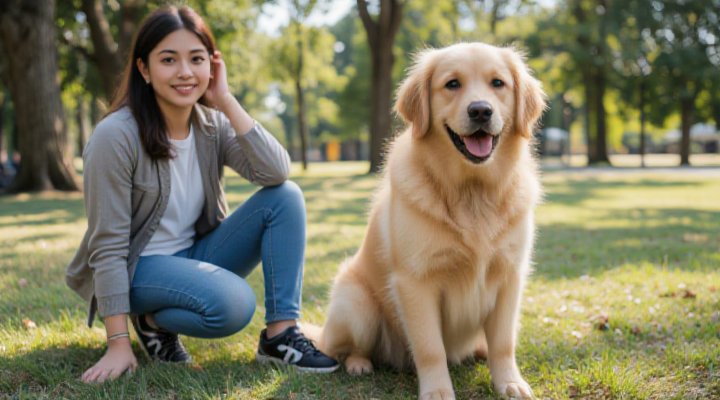
Advanced dog obedience training builds on basic commands like sit and stay, introducing more intricate tasks that require focus and precision. That is to say, it’s not just about obedience; it’s about enhancing your dog’s cognitive abilities and physical coordination. Consequently, this type of training can lead to better behavior in various settings, from busy parks to formal events. For example, teaching a dog to respond to hand signals or perform sequences of actions falls under advanced dog obedience training. Similarly, if you’re interested in other pet skills, check out our article on how to train a senior dog new tricks for age-appropriate methods.
Key Components of Advanced Commands
Complex commands in advanced dog obedience training often involve multi-step tasks or responses to subtle cues. For instance, a ‘retrieve and drop’ command requires the dog to fetch an item and release it on cue, which improves their problem-solving skills. Moreover, incorporating distractions during training sessions helps dogs learn to focus amidst chaos, a crucial skill for competitions. In my own experience with my Labrador, Max, practicing these commands in different environments made him more reliable. Further, using positive reinforcement, such as treats or praise, ensures that advanced dog obedience training remains enjoyable and effective.
Improving Agility for Advanced Performance
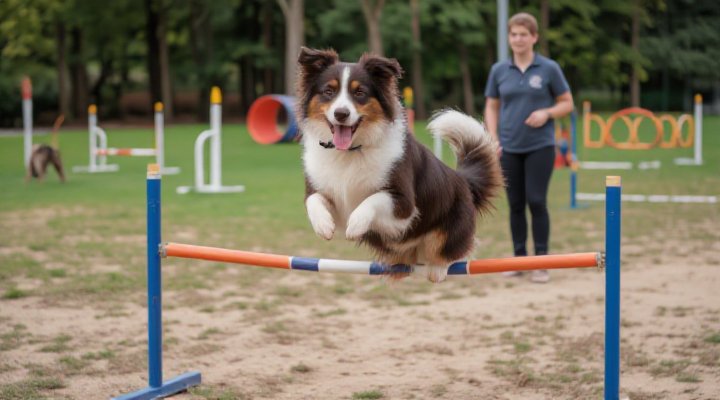
Agility is a vital aspect of advanced dog obedience training, as it enhances a dog’s speed, coordination, and overall fitness. But, on the other hand, it’s important to start slowly to prevent injuries, especially for older dogs. For example, setting up simple obstacles like jumps or tunnels in your backyard can be a fun way to begin. Subsequently, as your dog progresses, you can introduce more challenging courses that mimic competition settings. Importantly, always monitor your dog’s energy levels and provide plenty of water breaks. If you need more tips, our post on advanced dog training for agility offers professional advice to boost performance.
Agility Training Techniques
Effective agility training in advanced dog obedience training involves a mix of physical exercises and mental stimulation. Firstly, use consistent verbal cues and hand signals to guide your dog through obstacles. Secondly, gradually increase the difficulty to keep them engaged and challenged. During sessions, I’ve found that short, frequent practices work better than long, exhausting ones. Likewise, incorporating games like fetch or hide-and-seek can make agility training more dynamic. Consequently, this approach not only improves physical skills but also strengthens the trust between you and your pet.
Preparing for Obedience Competitions
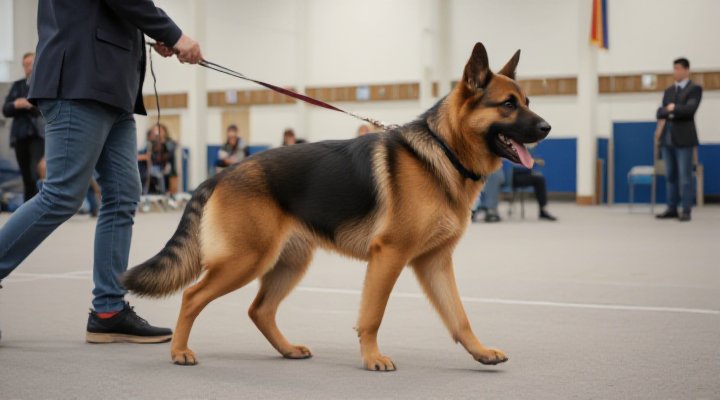
Competitions are a great way to showcase the results of advanced dog obedience training, providing goals and motivation for both you and your dog. That is to say, they test precision, speed, and obedience under pressure. To clarify, events often include heelwork, retrieves, and stays, requiring flawless execution. Therefore, start by simulating competition environments at home or in local parks to acclimate your dog. For instance, practice with background noises or other dogs nearby. Additionally, consider joining a training club; in my case, enrolling Max in a group class boosted his confidence. Most importantly, focus on having fun—competitions should be a positive experience that celebrates your hard work in advanced dog obedience training.
Competition Readiness Tips
To excel in competitions, advanced dog obedience training must include routine rehearsals and stress management. Firstly, establish a pre-competition routine that includes calm warm-ups and positive reinforcement. Secondly, familiarize your dog with the venue beforehand to reduce anxiety. After that, review the competition rules to avoid penalties. Similarly, ensure your dog is healthy and well-rested; a tired dog won’t perform at their best. Consequently, this preparation leads to smoother performances and higher scores, making all the effort in advanced dog obedience training worthwhile.
Integrating Complex Commands into Daily Life
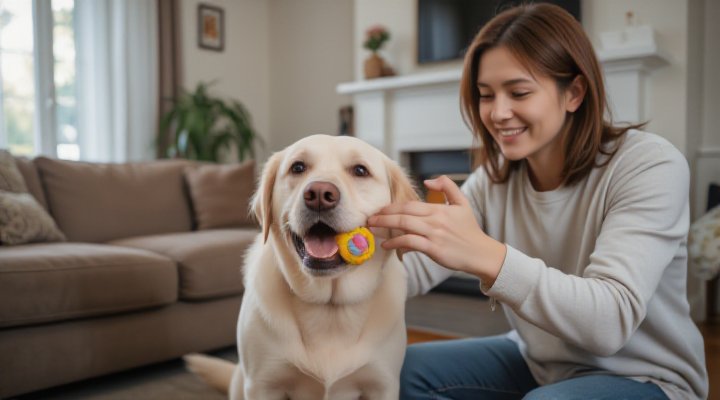
Advanced dog obedience training shouldn’t be confined to sessions; integrating complex commands into daily routines reinforces learning. In other words, use real-life scenarios to practice, such as having your dog wait at doors or retrieve specific items. For example, teaching a ‘go to place’ command can be useful when guests arrive. Moreover, this integration helps dogs generalize skills, meaning they obey in various contexts. During my training with Max, I made it a game by hiding toys and asking him to find them, which sharpened his retrieval abilities. Further, consistency in cues and rewards ensures that advanced dog obedience training translates to reliable behavior everywhere.
Practical Applications of Advanced Skills
The skills from advanced dog obedience training have practical benefits beyond competitions. For instance, a dog that can perform complex commands is safer in public spaces and more adaptable to new situations. But, however, it’s essential to tailor training to your dog’s breed and personality; some may excel in agility, while others in precision tasks. Likewise, using high-value rewards keeps motivation high. Certainly, the joy of seeing your dog master a tough command is priceless, and it deepens your connection. If you’re looking for more resources, the American Kennel Club offers excellent guides on advanced techniques.
Conclusion: The Rewards of Advanced Dog Obedience Training
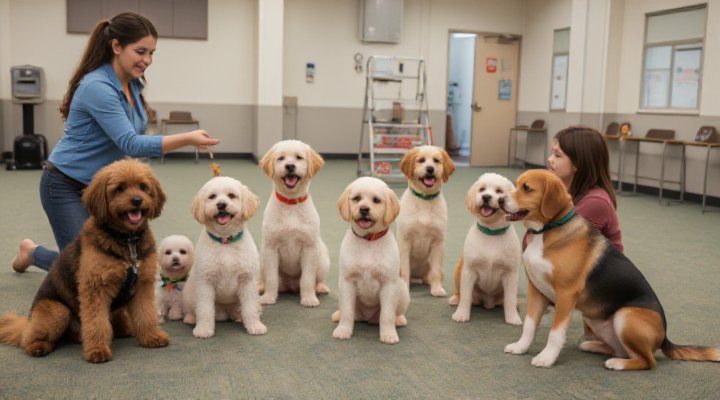
In conclusion, advanced dog obedience training is a fulfilling endeavor that enhances your dog’s discipline, agility, and performance. To sum up, it involves mastering complex commands, improving physical abilities, and preparing for competitive events. In short, the benefits extend to everyday life, making your dog a well-behaved and joyful companion. Therefore, I encourage you to embark on this journey with patience and positivity. Remember, every small success in advanced dog obedience training builds toward a stronger bond and a happier pet. For further learning, explore our cat training techniques guide if you have feline friends too, or check out authoritative sources like the American Veterinary Medical Association for health-related advice.
Related Keywords: advanced dog obedience training, complex commands, dog agility, competition preparation, canine discipline, obedience skills, dog training techniques, performance enhancement, advanced obedience, dog competition skills
