
In this comprehensive guide, we explore how to train a cat with treats using positive reinforcement techniques. This method leverages tasty rewards to teach commands, shape behaviors, and strengthen the bond between you and your feline friend. We’ll cover everything from choosing the right treats to advanced training strategies, ensuring a fun and effective learning experience for your cat. Above all, patience and consistency are key to success in cat training with treats.
Understanding Positive Reinforcement in Cat Training
Positive reinforcement is a powerful tool in animal training, and it works wonders for cats. In other words, when you reward desired behaviors with something your cat loves—like treats—you increase the likelihood of those behaviors repeating. For instance, if your cat sits on command and gets a tasty snack, they’ll associate sitting with good things. Consequently, this method builds trust and makes learning enjoyable. Moreover, it’s based on scientific principles supported by experts, such as those at the American Veterinary Medical Association, which emphasizes humane training practices. Similarly, many pet owners find that using treats helps overcome a cat’s natural independence, making training sessions more productive.
Choosing the Right Treats for Training Your Cat
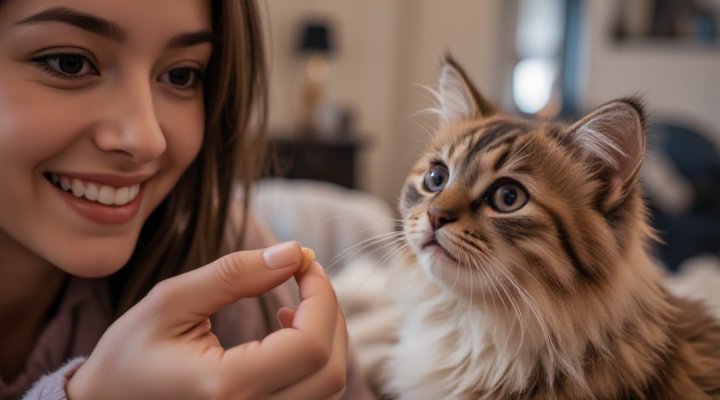
Selecting appropriate treats is crucial when you’re learning how to train a cat with treats. Firstly, opt for small, low-calorie options to avoid overfeeding. For example, commercial cat treats or small pieces of cooked chicken can be great choices. Additionally, consider your cat’s preferences—some felines go crazy for fish-flavored snacks, while others prefer poultry. That is to say, if your cat isn’t motivated by a particular treat, try different types until you find the winner. Furthermore, always check for healthy ingredients to support your cat’s overall well-being. In the same vein, our article on healthy cat treats recipes offers homemade ideas that can be perfect for training. Most importantly, avoid treats with artificial additives, as they can lead to health issues over time.

Basic Steps to Train a Cat with Treats
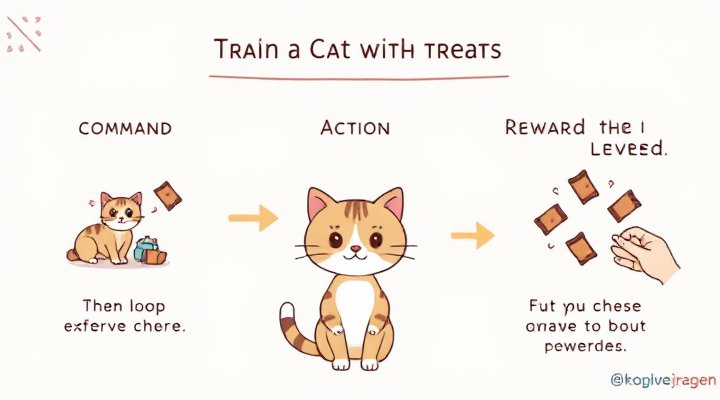
Now, let’s dive into the practical steps for how to train a cat with treats. Firstly, start in a quiet, distraction-free environment to help your cat focus. Secondly, use a clear, consistent command, like “sit” or “come,” and pair it with a treat reward when your cat performs the action. For instance, hold a treat above your cat’s head to encourage them to sit, then give the treat immediately. Subsequently, practice short sessions of 5-10 minutes to prevent boredom. Likewise, gradually increase difficulty as your cat masters each skill. But, however, if your cat seems stressed, take a break and try again later. Above all, celebrate small successes to keep motivation high. During this process, you might also refer to our guide on cat training techniques for more tips.
Teaching Simple Commands with Treat Rewards
When teaching commands, break them down into manageable steps. For example, to train “come,” call your cat’s name and reward them when they approach. Consequently, they’ll learn that responding to their name brings rewards. Similarly, for “stay,” ask your cat to sit, then step back briefly before giving a treat. In addition, use a clicker or a verbal marker like “yes” to pinpoint the exact behavior you’re rewarding. That is to say, this clarity helps your cat understand what you want. Further, always end sessions on a positive note with a favorite treat. Certainly, this approach not only teaches obedience but also enhances your bond, as highlighted in resources like the Humane Society guides on pet care.
Advanced Techniques for Cat Training with Treats
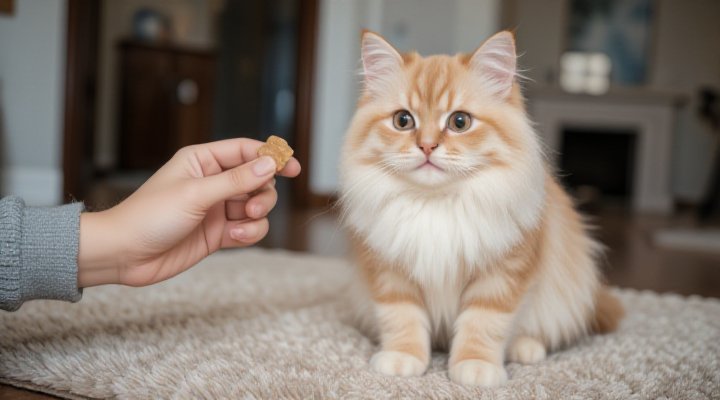
Once your cat has mastered basics, you can move to more advanced behaviors. For instance, training a cat to high-five or use a scratching post can be fun and rewarding. Moreover, incorporate treats into trick training by shaping behaviors—rewarding incremental progress toward the final action. In other words, if you want your cat to jump through a hoop, start by rewarding them for approaching it, then for touching it, and so on. Additionally, vary the treats to maintain interest; sometimes use high-value rewards for challenging tasks. On the other hand, be patient, as cats learn at their own pace. Meanwhile, our piece on socializing kittens discusses how early training with treats can set a foundation for lifelong skills.
Using Treats to Address Behavioral Issues
Treats can also help modify unwanted behaviors, such as scratching furniture or excessive meowing. For example, if your cat scratches the couch, redirect them to a scratching post and reward them with a treat when they use it. Consequently, they’ll learn that the post is a better option. Similarly, for noise issues, reward quiet moments to reinforce calm behavior. But, however, avoid using treats to reward negative actions accidentally. To clarify, only give treats when the desired behavior occurs. Further, combine this with environmental adjustments, like providing plenty of toys. In the same vein, consistency is key—every family member should follow the same rules to avoid confusion.
Common Mistakes to Avoid in Cat Training with Treats
While learning how to train a cat with treats, it’s easy to make errors that hinder progress. Firstly, over-treating can lead to weight gain, so measure portions carefully. Secondly, inconsistency in commands or rewards can confuse your cat. For instance, if you use “sit” one day and “down” the next for the same action, your cat might not learn effectively. Additionally, pushing too hard or training when your cat is tired can cause stress. That is to say, watch for signs of frustration, like tail flicking or avoidance, and stop if needed. Most importantly, never punish your cat during training; positive reinforcement focuses on rewards, not corrections. Similarly, our article on litter box training shows how treats can aid in habit formation without force.
Building a Strong Bond Through Treat-Based Training
Ultimately, training your cat with treats is about more than just obedience—it’s a way to deepen your relationship. For example, regular sessions filled with rewards create positive associations and trust. Moreover, this bonding time can reduce stress for both you and your cat. In addition, as you see progress, you’ll feel a sense of accomplishment together. Consequently, many cat owners report that their pets become more affectionate and responsive. Likewise, sharing these joyful moments can improve your overall well-being. To sum up, whether you’re teaching simple tricks or solving behavior problems, the journey of how to train a cat with treats is rewarding in itself. For further insights, check out best pet training methods on our site.
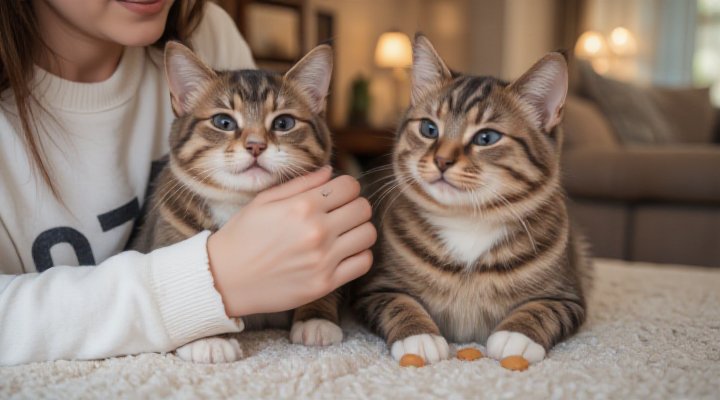
In conclusion, mastering how to train a cat with treats involves patience, the right rewards, and a lot of love. By following these methods, you can teach your feline companion new skills while strengthening your bond. Remember, every cat is unique, so adapt these tips to suit your pet’s personality. Happy training!
Related Keywords: cat training with treats, positive reinforcement for cats, training cats with snacks, effective cat training methods, cat behavior training, reward-based cat training, teaching cats commands, feline training techniques.
